
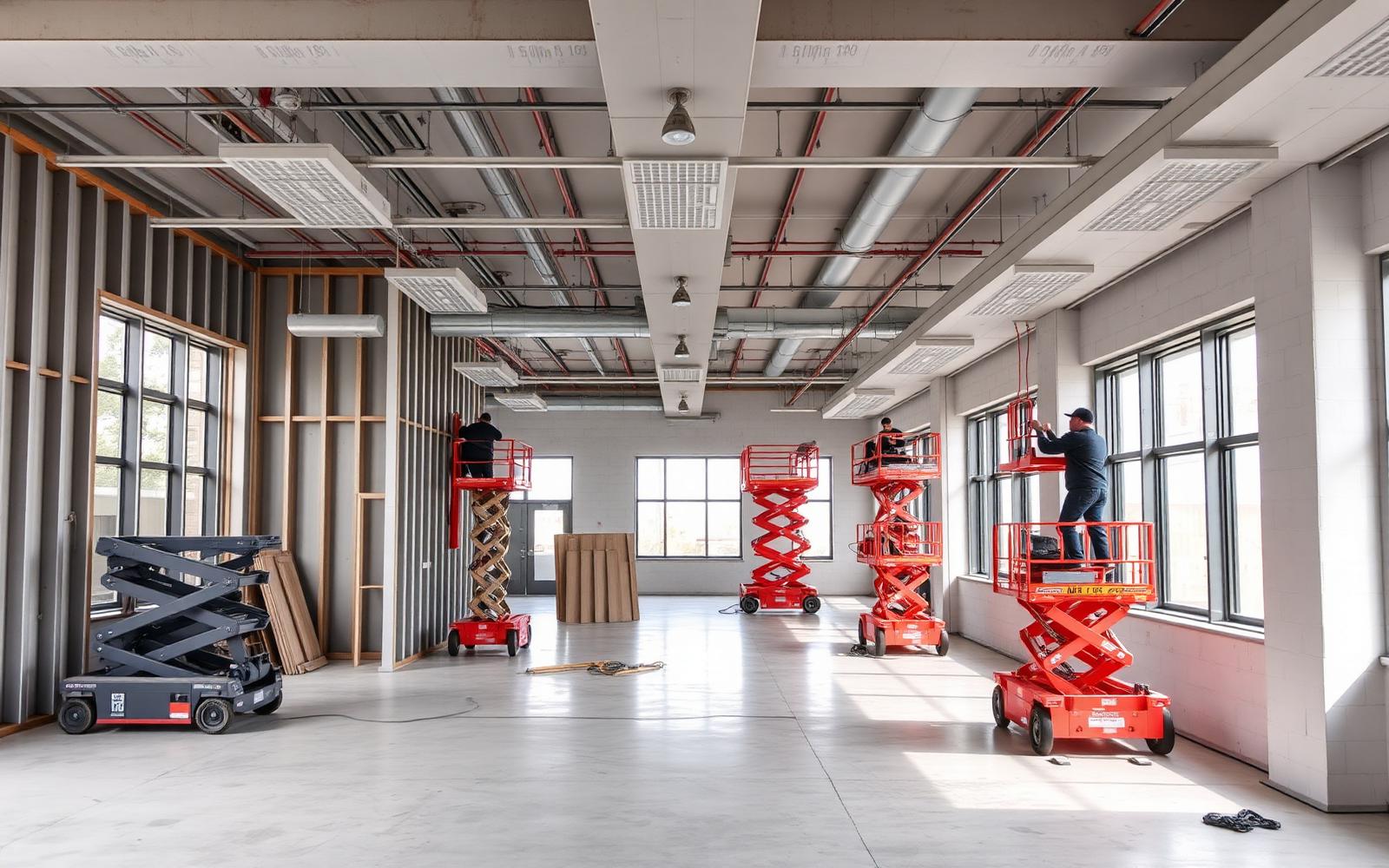
The constraint that shapes everything
An occupied renovation is not a normal job with extra rules bolted on. The tenant's working day is the schedule, and every activity is priced against the hours it is actually allowed to happen in. Demolition, core drilling, fireproofing patches and anything that trips a smoke detector move to nights and weekends. Drywall, taping, millwork installation and painting can usually stay in daylight behind a sealed hoarding.
We build the phasing plan before we build the estimate. Splitting the floor plate into four zones let us hand back finished space every six weeks, which mattered more to the tenant than finishing two weeks earlier overall.
Containment is a life-safety scope, not a courtesy
Temporary demising walls were framed full height to the deck, sealed at the slab and fitted with self-closing doors. Each work zone ran under negative air with HEPA filtration, and we monitored pressure differentials daily. Where existing materials predated 2000, a designated-substance survey ran before a single fastener came out of a wall.
The sprinkler and detection systems were the tightest part of the plan. Every impairment was scheduled, permitted with the building operator, covered by a fire watch and restored the same shift. Nothing was left in an impaired condition overnight.
- Full-height hoarding sealed at slab and deck, with dust mats at every entry
- Negative-air HEPA units sized to the zone volume, logged daily
- Detector bagging and sprinkler impairment permits closed out the same shift
- Designated-substance survey completed before demolition in pre-2000 areas
Logistics decide whether people notice you
Tenants tolerate construction they do not have to walk through. We negotiated a dedicated freight elevator window from 6 p.m., a fixed loading-dock slot, and a delivery route that never crossed the tenant lobby. Waste left the building at night in covered bins.
Trade labour was staged so that no more than one loud activity ran at a time. When two had to overlap, we notified the tenant contact 48 hours ahead with the specific floors, hours and expected noise level — not a general warning.
What it costs, and why that is the right number
Off-hours premiums, hoarding, air handling and additional supervision typically add 12 to 20 percent to an interiors budget on an occupied floor. Owners sometimes try to remove that line. In our experience the alternative — a complaint-driven shutdown, an after-the-fact air-quality test, or an unplanned tenant relocation — costs several times more and lands without warning.
The honest framing is that you are buying the tenant's uninterrupted operation. Price it openly at buy-out, show it as its own line, and the conversation with the owner stays straightforward.